

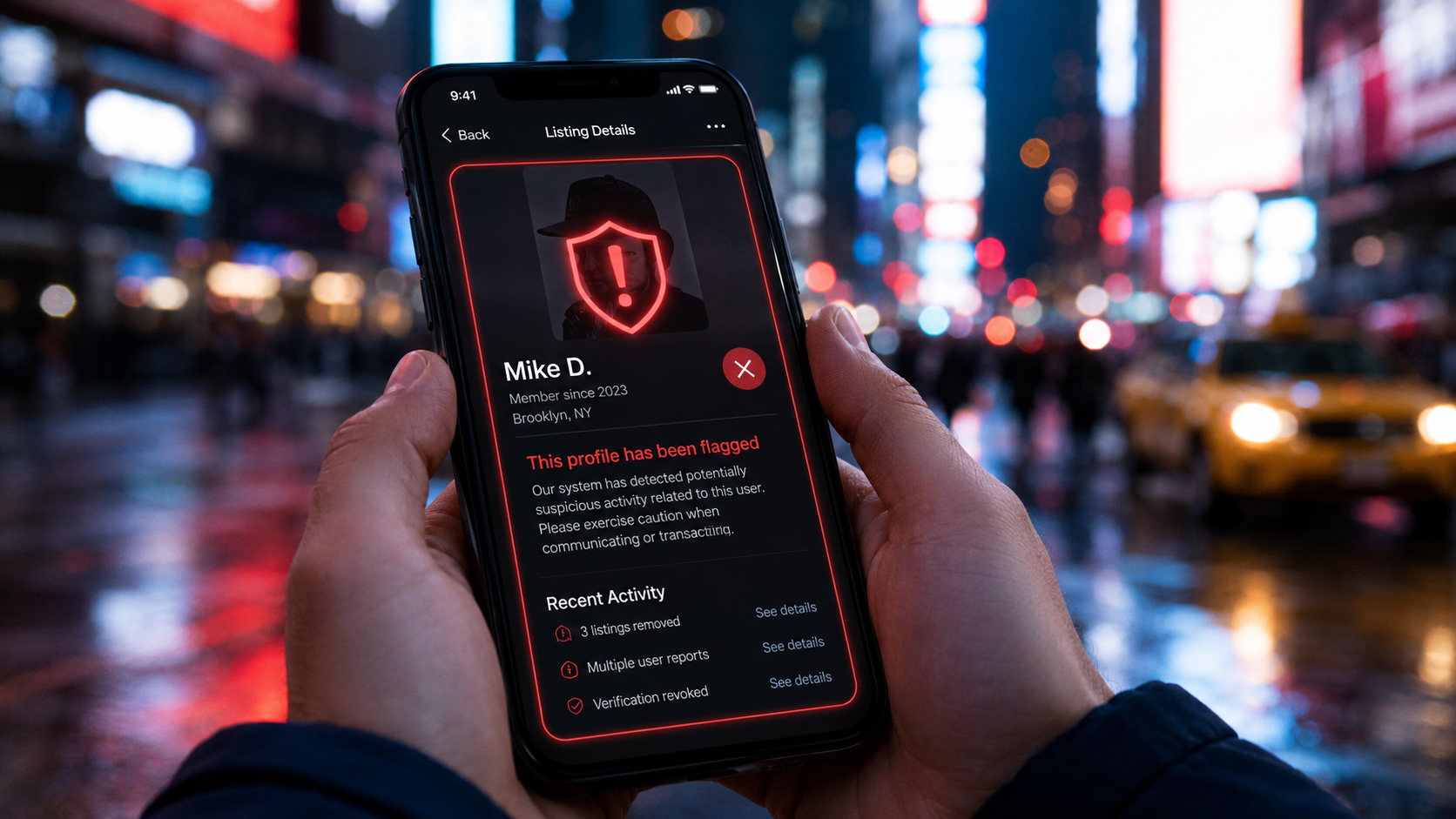
New York City has the largest classified listings market on the East Coast — and that scale cuts both ways. More listings mean more options, but also more opportunities for scammers to hide in the noise. Fake listings new york city browsers encounter range from simple catfish profiles to sophisticated deposit scams that target visitors who don’t know better. If you’ve ever clicked on a promising NYC profile only to get burned, this guide is exactly what you needed before that happened.
The good news is that fake listings follow predictable patterns. Once you know what to look for, spotting them takes seconds rather than minutes. This guide covers every major red flag specific to the New York City market borough by borough where relevant and gives you a practical checklist you can run through before messaging anyone.
Contents
Why Fake Listings Are a Bigger Problem in NYC Than Most Cities
New York City processes more listing traffic than almost any other American city. Sixty million annual visitors, a massive transient population, and a 24/7 culture that never slows down creates ideal conditions for scammers. They know the turnover is fast, the demand is constant, and new targets arrive every single day off planes at JFK, LaGuardia, and Newark.
Also, NYC’s geographic complexity works in scammers’ favor. A visitor who doesn’t know the difference between Astoria and Flushing, or who doesn’t realize that “Midtown” covers about forty blocks, is easy to mislead with vague location information. Fake listings exploit this confusion constantly.
Furthermore, the sheer volume of legitimate listings provides excellent cover. When there are thousands of active profiles, a few hundred fake ones blend in easily. That’s why passive browsing just scrolling without a system is genuinely dangerous in the NYC market.
The Most Common Fake Listing Types in New York City
Before getting into specific red flags, it helps to understand the three main scam categories operating in NYC right now.
The Catfish Profile: Someone steals photos from an Instagram model or OnlyFans creator, builds a convincing profile, and collects deposits from people who believe the profile is real. The photos are often of well-known creators with large followings because those images are everywhere and easy to find.
The Deposit Scammer: The profile looks legitimate, the communication feels professional, and then comes the ask a “booking deposit” via Zelle, CashApp, or Venmo to “secure your time slot.” Once you send it, they block you and disappear.
The Bait and Switch: The profile is technically real, but what shows up — whether in person or in further communication is completely different from what was advertised. This happens most frequently in high-traffic zones like Midtown Manhattan and around the major hotel corridors near Times Square.
All three types are active across every borough, though they concentrate most heavily in tourist-heavy Manhattan zones.
Red Flag #1: Photos That Don’t Match New York City
This is the fastest tell and it works almost every time. Look at the background of every photo carefully. Real New York City-based providers almost always have at least one photo that shows something recognizably New York a brick wall, a classic NYC apartment interior, a window view with the distinctive NYC rooftop water towers, or the unmistakable style of a Manhattan hotel room.
Fake listings typically use photos pulled from providers in Miami, Los Angeles, Atlanta, or overseas. The backgrounds are wrong. The architecture doesn’t match. The outdoor lighting looks like Florida in January, not Manhattan in March.
Also watch for photos that are clearly professional editorial shoots with no environmental context whatsoever. Pure white background studio shots tell you nothing about where this person actually is. They could be anywhere or they could be AI-generated entirely, which is an increasingly common problem in 2026.
Red Flag #2: Phone Numbers That Appear Across Multiple Cities
Copy the contact number from any suspicious profile and run it through a basic Google search. In thirty seconds you’ll know if that number has been posted in listings for Dallas, Chicago, Phoenix, and NYC within the same week. That’s a traveling scammer who mass-posts identical ads across platforms.
Real NYC-based providers typically maintain the same contact number for extended periods. They have established clients who reach them at that number. They don’t rotate numbers every few days because they have nothing to hide.
Also pay attention to area codes. A profile claiming to be based in Midtown Manhattan with a 305 Miami area code or a 404 Atlanta area code deserves extra scrutiny. Not every out-of-state area code is a red flag people keep their numbers when they move but combined with other warning signs, it matters.
Fake Listings New York City: Location Claims That Don’t Add Up
NYC fake listings frequently claim neighborhoods that don’t make geographic sense. A provider who claims to be “near Times Square and also available in Brooklyn Heights” without mentioning the forty-minute commute between them is either exaggerating their coverage area or doesn’t know the city at all.
Real New York providers are specific about their location because logistics matter enormously in this city. They know which subway lines are nearby. They reference cross streets. They understand that saying “Upper East Side” means something very different from “Midtown East” to someone trying to figure out travel time from their hotel.
When a profile says something vague like “all of Manhattan available” or “NYC and all boroughs,” that vagueness is a warning sign. Legitimate providers have a primary location and are clear about it. They might offer outcall services across a wider area, but they’re specific about where they’re actually based.
Red Flag #3: Pressure Tactics and Rushed Communication
The moment someone starts rushing you in a conversation, slow down. Pressure is a scammer’s primary tool because it short-circuits your critical thinking. Common pressure phrases in NYC fake listings include:
- “I have someone else interested, you need to decide now”
- “I’m only available for the next two hours, send the deposit quickly”
- “This rate is only good if you book today”
- “I have a strict cancellation policy deposit required immediately”
Real providers in New York don’t operate this way. They have steady business. They don’t need to pressure anyone into a rushed decision. A legitimate provider who is actually in demand doesn’t need to manufacture urgency their availability naturally creates it.
Also, be wary of anyone who immediately pushes the conversation to an external app before any real exchange has happened. Moving to WhatsApp or Telegram in the first message is sometimes fine but when it happens before they’ve even answered a basic question about their location, it usually means they’re trying to get you off a monitored platform.
How to Use Verification to Filter Out Fake Listings NYC
Verification is your strongest single tool against nyc scam listings. Browse the verified New York City listings page and apply the verified filter before doing anything else. This single step eliminates the majority of fake profiles instantly.
Here’s why verification works so well against scammers specifically: the process requires submitting identity documentation that matches the profile photos. Scammers operating with stolen images can’t complete this process. They’d be submitting someone else’s ID which gets rejected or their own ID against mismatched photos, which also fails.
As a result, verified listings in NYC have a dramatically lower fake rate than unverified ones. The list is smaller, but the signal-to-noise ratio is incomparably better. In a city with this much listing volume, a smaller, cleaner list is exactly what you want.
Borough-Specific Scam Patterns to Know
Fake listings don’t distribute evenly across NYC’s boroughs. They cluster where traffic is highest and where targets are most unfamiliar with the area.
Manhattan: Highest Scam Concentration
Midtown Manhattan particularly the blocks around Times Square, the Theater District, and the hotel corridor along Seventh Avenue has the highest concentration of fake listings in the entire city. Visitors in these areas are making fast decisions, often under time pressure, and frequently don’t know the local market well enough to spot obvious red flags.
The Financial District and Tribeca see fewer fakes simply because the client base there is more experienced and more demanding in terms of verification. Scammers gravitate toward softer targets.
Brooklyn: Lower but Growing
Brooklyn’s fake listing rate is lower than Manhattan but has been growing as the borough’s visibility increases. Williamsburg is the primary hotspot it’s the most-searched Brooklyn neighborhood and therefore the most attractive for fake profile placement. Park Slope and Brooklyn Heights have lower fake rates because the local browsing culture is more discerning.
Queens: Local Market, Lower Fake Rate
Queens generally has a lower fake listing rate than Manhattan because the market is more locally driven. Providers in Astoria, Jackson Heights, and Flushing primarily serve repeat local clients rather than passing tourists. That client base is harder to scam because they already know what legitimate local profiles look like.
The Deposit Scam: Still the #1 Way People Lose Money in NYC
It bears repeating because it keeps working. The deposit scam is the most financially damaging fake listing pattern in New York City, and it catches people who should know better.
The script goes like this: you find an attractive profile, you message, the communication feels smooth and professional, and then they explain they require a deposit to hold your appointment because they’ve had too many no-shows. It sounds reasonable. It isn’t.
No legitimate independent provider in New York City requires deposits from brand new clients they’ve never met paid through untraceable apps like CashApp, Zelle, or Venmo. The combination of those two factors new client and untraceable payment should be an automatic stop signal every single time.
Some established providers do ask repeat clients for deposits when scheduling during busy periods. That’s different. First contact, untraceable app, urgent timeline: walk away every time.
Your Quick Checklist for Every NYC Listing
Run every profile through this list before sending a single message:
- Reverse image search the main photo does it appear elsewhere?
- Google the phone number does it show up in other cities?
- Check the location claim is it specific and geographically accurate for NYC?
- Look at the background in photos does it look like New York?
- Check the last active date was it updated recently?
- Read the bio for specific NYC references real providers mention local details
- Look for the verified badge filter to verified before anything else
- Does anything feel rushed or pressured in the profile text itself?
If a listing fails two or more of these checks, close it and move on. There are thousands of legitimate profiles in New York City. There’s no reason to take a risk on a suspicious one.
What to Do If You’ve Already Encountered a Fake NYC Listing
It happens to experienced browsers too. Don’t waste time feeling embarrassed use that energy to take action instead.
First, report the listing immediately on Escorttime. Use the report function built into every profile page. Include as much detail as possible the phone number, the specific claims that turned out to be false, and any screenshots you captured during the conversation. Platforms investigate reports quickly when evidence is provided.
Second, if you sent money through a payment app, contact your bank or the app’s support immediately. Zelle disputes are harder to win, but CashApp and Venmo have fraud reporting processes that sometimes result in reversals when reported quickly.
Third, warn the community. If the platform has a review or comment function, use it. Post the phone number on scam reporting sites. Other people searching that number will find your warning and avoid the same trap.
Conclusion

The fake listings new york city problem is real and it’s not going away. But it’s also completely manageable once you know what to look for. The patterns are consistent, the red flags are recognizable, and the tools to protect yourself verification filtering, reverse image search, basic Google checks are free and take thirty seconds to use.
Start with the new york city listings guide to understand how the market is structured, then apply the red flag checklist from this article to every profile you evaluate. That combination gives you genuine protection in one of the world’s busiest and most complex classified listing markets.
Stay skeptical, stay patient, and never send money to someone you haven’t met.
Frequently Asked Questions
Which NYC borough has the most fake listings?
Manhattan specifically the Midtown and Times Square corridor consistently has the highest concentration of fake listings. The high tourist traffic and fast visitor turnover make it the most attractive target zone for scammers operating in New York City.
How do I know if NYC listing photos are stolen?
Copy the image URL or save the photo and run it through Google Images or TinEye reverse image search. If the same photos appear on escort sites in other cities or on social media accounts belonging to someone else, the profile is using stolen images.
Is it safe to pay a deposit for a New York City listing booking?
Almost never for a first-time contact. Legitimate independent providers in NYC don’t require upfront deposits from new clients through untraceable payment apps. If someone asks for a deposit via CashApp, Zelle, or Venmo before you’ve ever met, treat it as a scam.
Do fake listings in NYC target specific types of visitors?
Yes. Business travelers staying in Midtown hotels, convention attendees, and people visiting for major NYC events are the most frequently targeted. Scammers know these visitors are unfamiliar with the local market, making quick decisions, and less likely to do thorough research before reaching out.
What’s the single most effective thing I can do to avoid fake NYC listings?
Filter to verified listings only before you start browsing. Verified profiles on Escorttime have confirmed their identity against their photos, which eliminates the vast majority of catfish and deposit scam operations in one step.

Leave a Reply