


Screening is one of the quiet realities of independent companionship. It is not about suspicion or gatekeeping, and it is rarely dramatic. For escorts, screening is a practical process that helps keep boundaries clear, time respected, and situations predictable on both sides.
When someone works independently, there is no agency buffer and no third party making decisions. That means escorts take responsibility for who they spend time with and under what conditions. Over time, many develop simple, consistent checks that help them feel comfortable saying yes, or confidently saying no, before any meeting is agreed.
Contents
Why Screening Matters in Independent Companionship
Independent companionship is built on direct communication. There is no intermediary deciding who qualifies as a suitable client. That means escorts have to make those calls themselves.
Screening serves several purposes at once.
- First, it helps establish basic trust. Companionship involves shared time, presence, and attention. Knowing who the other person is, even in a limited way, makes that exchange feel grounded rather than risky.
- Second, screening filters out individuals who do not respect professional boundaries. Escorts value their time as professional social companions, similar to other personal service providers who offer time-based attendance. Long message exchanges that go nowhere, unclear plans, or inconsistent communication are often signs that someone is not serious.
- Third, screening protects boundaries. When expectations are unclear, misunderstandings follow. Early screening helps align on tone, logistics, and mutual respect before anything is agreed.
Finally, screening is about personal safety. This is not unique to companionship. Anyone who meets strangers as part of their work develops ways to reduce uncertainty. Escorts simply do it more consciously, because the stakes are higher.

Supporting Safer, Clearer Connections at Escorttime
At Escorttime, we built the platform around privacy, freedom, and direct communication. We believe independent companions should be able to present themselves clearly, set their own terms, and decide who they want to spend time with, without agencies, commissions, or outside pressure shaping those choices.
Our role is simple. We provide the structure, visibility, and tools that make screening and communication easier before any companionship is agreed. Profiles are verified, locations are clear, and contact stays direct. That clarity helps reduce guesswork on both sides and supports more confident decisions from the very first message.
We do not manage interactions or stand between two people deciding how to connect. What we offer is a trusted space where providers stay in control of their presence and clients can browse with confidence, knowing they are engaging with real, independent companions. That foundation makes thoughtful screening possible and helps keep companionship professional, respectful, and transparent.
The First Filter: How Someone Makes Contact
Screening often begins with the very first message.
Many escorts say they can tell a lot from how someone reaches out. Clear, polite communication is usually a good sign. Messages that are rushed, demanding, or careless often raise red flags.
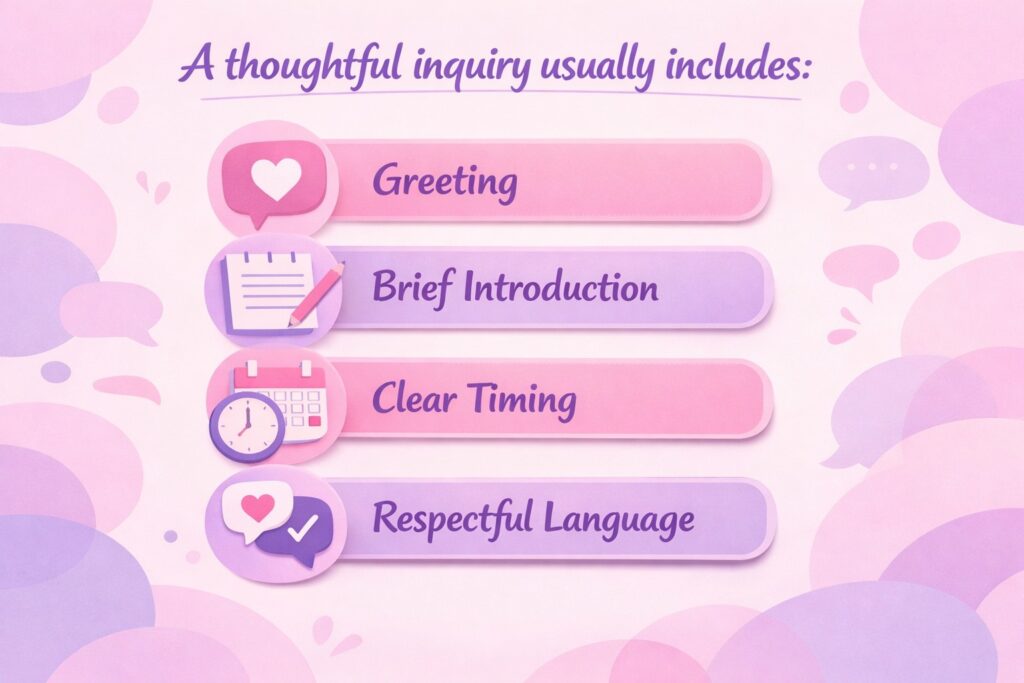
A thoughtful inquiry usually includes:
- A greeting
- A brief introduction
- Clear timing or availability
- Respectful language
By contrast, messages that read like orders, ignore basic details, or feel copied and pasted tend to signal problems later on.
This first filter is not about perfection. It is about effort. Someone who takes a moment to communicate clearly is more likely to respect boundaries later.
Identity Checks and Basic Verification
Once initial communication feels solid, many escorts move to basic verification.
This does not always mean full personal details. Screening is about balance. Escorts generally want enough information to feel comfortable, without turning the process into an interrogation.
Common verification steps include:
- A real name or consistent alias
- A working phone number
- An active email address
- A brief professional reference, if available
Some escorts ask for proof of identity in limited form, such as a work profile or professional presence elsewhere. Others rely on references from people they already know or trust within the community.
The purpose is simple: confirm that the person exists, communicates consistently, and is not hiding behind disposable contact details.
References and Community-Based Screening
In independent companionship, community matters.
Many escorts rely on informal networks to screen clients. This might include trusted peers, private groups, or professional circles where information is shared discreetly.
References work both ways. A positive reference can move the process forward quickly. A negative one usually ends it immediately.
These systems are not about gossip. They are about pattern recognition. When multiple people report similar concerns about the same individual, escorts pay attention.
Not every client has references, especially if they are new. In those cases, escorts often rely more heavily on identity checks, clear communication, and upfront transparency.
Phone Calls and Voice Screening
For some escorts, a short phone call is an important step.
Hearing someone speak can reveal a lot that messages do not. Tone, patience, and basic social skills matter. A call also helps confirm that the contact details provided are real.
Phone screening is often brief. It is not an interview. It is simply a way to confirm that the person sounds genuine, respectful, and aligned with what was discussed in writing.
Some escorts avoid phone calls entirely, preferring written communication. Others consider them essential. There is no universal rule, only personal comfort.
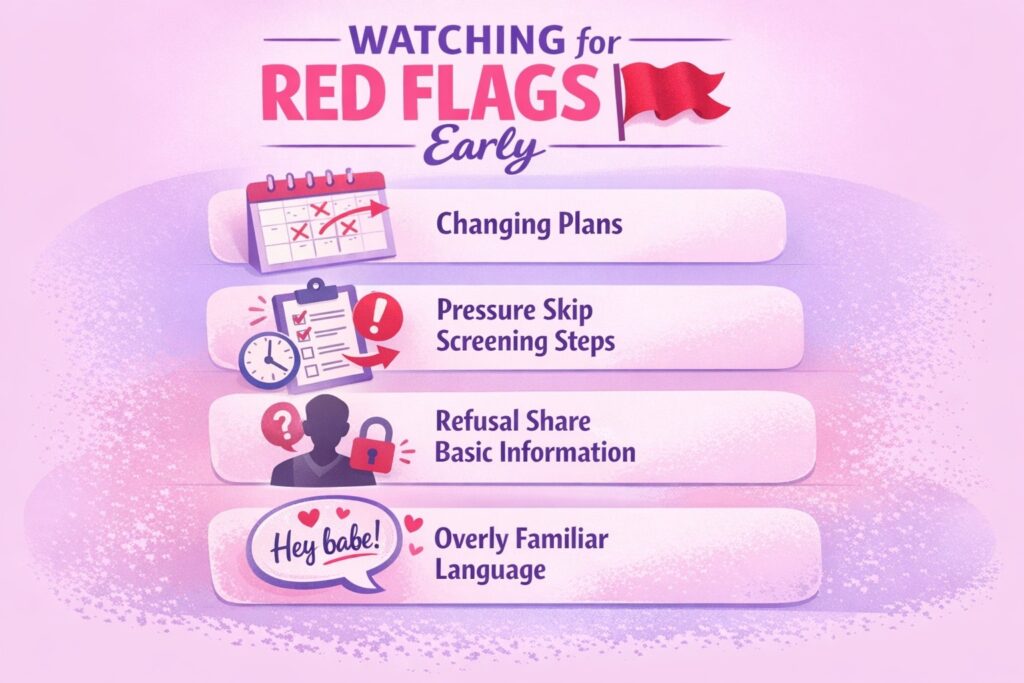
Watching for Red Flags Early
With experience, many escorts start to recognize the same warning signs repeating themselves. These signals usually appear long before a meeting is agreed and often show up in small, easy-to-miss details.
Inconsistent or Changing Plans
Frequent shifts in time, location, or availability can suggest uncertainty or a lack of respect for scheduling. While occasional changes happen, repeated adjustments often point to someone who is not fully committed.
Pressure to Skip Screening Steps
When a person pushes to bypass normal checks or rushes the process, it is usually a sign that they do not value boundaries. Screening exists for a reason, and resistance to it rarely leads to smooth interactions.
Refusal to Share Basic Information
Most escorts ask for minimal details to confirm identity and intent. When someone avoids even these basic steps, it raises questions about transparency and reliability.
Overly Familiar Language Too Early
Comfort takes time. Language that becomes personal or overly casual too quickly can signal blurred boundaries and unrealistic expectations before trust has been established.
Negotiating Boundaries Before Trust Is Built
Attempts to reshape limits during the early stages of contact often suggest future pressure. Clear boundaries are easier to maintain when they are respected from the start.
None of these behaviors automatically mean someone has bad intentions. On their own, they may be harmless. But when several appear together, they often indicate a higher risk of misunderstandings later on. Screening gives escorts the space to step back when something does not feel right, without needing to explain or defend that choice.
Deposits and Commitment Signals
Some escorts use deposits as part of their screening process.
A deposit serves several purposes. It demonstrates commitment, helps prevent last-minute cancellations, and provides a clear record of intent.
Deposits are not about control or punishment. They are practical tools that help escorts manage their time and reduce uncertainty.
Not every escort uses them. Those who do often see them as one more filter that separates serious clients from casual inquiries.
Trusting Instinct Alongside Process
No screening system is perfect.
Many escorts emphasize that instinct plays a role alongside formal checks. A message that technically passes every filter can still feel wrong. A conversation that breaks no rules can still raise quiet concerns.
Learning to trust that internal signal takes time. Newer escorts often rely more heavily on structured screening. With experience, intuition becomes sharper.
Screening is most effective when process and instinct work together.
In-Call and Arrival Awareness
Screening does not always end once a meeting is agreed.
Some escorts stay alert up to the moment of arrival. They may:
- Arrange visibility of arrival
- Confirm identity in person
- Take a moment to assess demeanor
This is not paranoia. It is professionalism. Many service-based roles involve similar awareness when meeting new people.
If something feels off at this stage, escorts generally feel empowered to stop, reschedule, or decline.
Why Screening Is Not Personal
One of the biggest misunderstandings about screening is that it reflects judgment.
It does not.
Escorts screen clients in the same way professionals screen projects, tenants screen roommates, or freelancers screen contracts. It is about fit, not worth.
A declined request does not mean someone did something wrong. It usually means the situation did not feel right for that particular escort at that particular time.
Independence means having the right to choose.
How Screening Benefits Both Sides
Although screening is often framed as a safety measure for escorts, it benefits clients as well.
Clear communication upfront reduces misunderstandings later. Expectations are aligned. Boundaries are understood. Time is respected.
Clients who pass through screening often report smoother interactions and a more relaxed experience overall, because both sides know where they stand.
Screening sets the tone for professionalism on both sides.
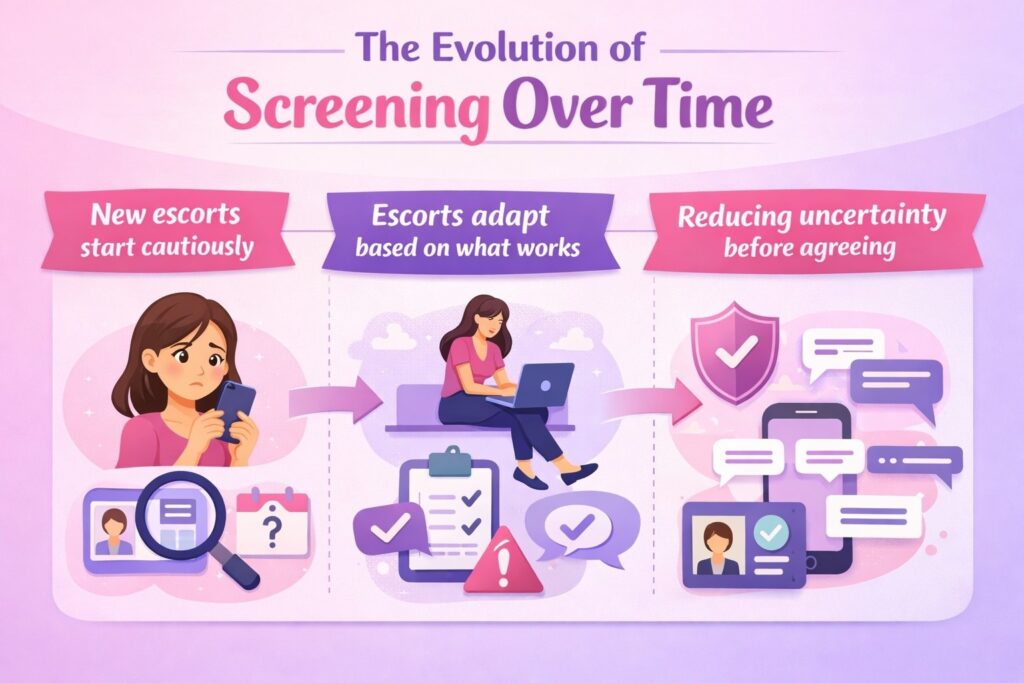
The Evolution of Screening Over Time
Screening practices change.
New escorts often start cautiously, sometimes with very detailed checks. As experience grows, systems are refined. Some steps are removed. Others become automatic.
Technology also shapes screening. Messaging platforms, search tools, and private networks evolve constantly. Escorts adapt based on what works and what does not.
What stays consistent is the underlying purpose: reducing uncertainty before agreeing to companionship.
Companionship as a Professional Exchange
At its core, screening reinforces one idea.
Companionship is a professional exchange of time and presence. Like any professional interaction, it requires trust, clarity, and mutual respect.
Screening is simply the mechanism that makes that possible.
It does not eliminate risk entirely. Nothing does. But it shifts the balance away from uncertainty and toward informed choice.
Final Thoughts
Screening is rarely dramatic. It is not a single checklist or universal system. It is a set of habits developed through experience, shared knowledge, and personal boundaries.
For independent escorts, screening is not optional. It is part of how independence works.
By understanding this process, it becomes clear that screening is not about secrecy or suspicion. It is about professionalism, autonomy, and the right to decide how and with whom time is shared.
In that sense, screening is not a barrier. It is the foundation that makes independent companionship possible at all.
Frequently Asked Questions
Screening helps escorts understand who they are communicating with before committing time and attention. It reduces uncertainty, protects personal boundaries, and supports safer, more predictable interactions for both sides.
No. Screening is not personal and it is not a judgment of character. It is a professional process, similar to how freelancers evaluate projects or landlords review tenants. The goal is fit and comfort, not evaluation of worth.
This varies, but it often includes a real name or consistent alias, a working phone number, and clear communication about timing. Some escorts may also ask for references or professional verification if available.
No. Screening methods differ based on experience, location, and personal comfort. Some escorts rely on minimal checks, while others use more structured processes. There is no single standard approach.
If screening does not feel right, an escort may decline the request or stop communication. This does not require explanation. Declining simply means the situation was not a good fit at that time.






Leave a Reply